
 English
 русский
 Español
No. 200 Gaoxin RD, Shanghua St, Lanxi, Zhejiang, P. R China
Surface heat treatment rack pinion gear is a mechanical transmission c...
See DetailsA sliding gate that jerks, grinds, or labors through its travel is not just an inconvenience — it is a sign that something in the drive system is working harder than it should. The noise gets louder over time. The motor strains more noticeably. Maintenance calls come more frequently. Often, the root of the problem is not the motor, not the controller, and not the gate itself. It is the rack — the toothed strip that the drive pinion engages to move the gate along its track. When that rack is worn, misaligned, or simply the wrong material for the application, smooth operation disappears and the entire system pays the price. Switching to a Nylon Rack for Sliding Gate systems is one of the more straightforward interventions that changes the behavior of the whole drive system, and the reasons why it works are worth understanding in full.
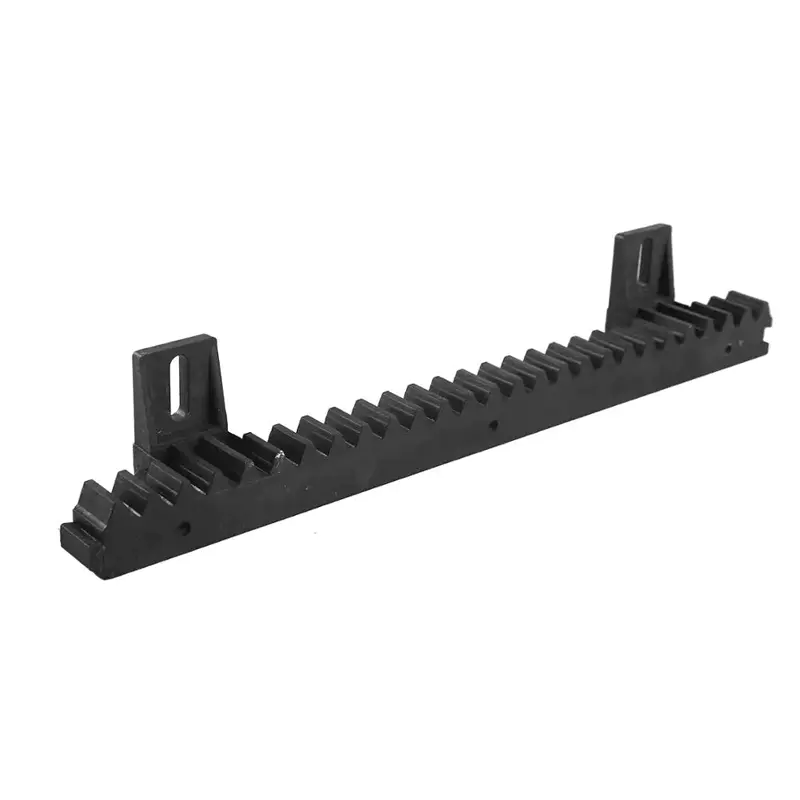
A sliding gate automation system relies on a rack-and-pinion drive. The rack is a flat, toothed strip mounted along the bottom or back of the gate panel. The pinion is a small gear driven by the gate operator motor. As the motor turns, the pinion teeth engage the rack teeth and translate rotational motion into linear motion — pushing or pulling the gate along its guide track.
The rack carries the full driving force of the motor. Every start, stop, acceleration, and deceleration loads the rack-pinion interface directly. Over thousands of cycles, the condition of this interface determines how smoothly and quietly the gate moves, how much load the motor carries, and how long the system lasts before components need attention.
Rack material selection is not a secondary detail in this system. It is one of the primary variables controlling how the drive performs in practice.
Before addressing why nylon improves performance, it helps to understand the failure mechanisms that cause sliding gate systems to deteriorate.
Metal-on-metal contact without adequate lubrication. Steel racks against steel pinions generate friction. Without regular lubrication, that friction increases — creating resistance the motor must overcome on every cycle, increasing noise, and accelerating tooth wear on both rack and pinion.
Rack tooth wear. As steel rack teeth wear unevenly, the engagement between rack and pinion becomes inconsistent. The gate hesitates, bumps, and vibrates as worn sections pass through the drive zone.
Corrosion on steel racks. Outdoor gate racks are exposed to rain, humidity, salt air, and temperature cycling. Steel racks corrode. As surface rust develops on tooth faces, the friction coefficient rises and the engagement geometry deteriorates.
Misalignment between rack and pinion. Slight vertical or lateral misalignment — common as track and post settle over time — causes the pinion to engage the rack at an angle, creating vibration and uneven load distribution.
All of these problems are either prevented or significantly reduced by switching the rack material from steel to nylon.
Nylon — specifically engineering-grade polyamide — has physical properties that make it behave very differently from steel under the conditions of a sliding gate rack application.
Low coefficient of friction. Nylon surfaces generate substantially less friction against metal than steel-on-steel contact. The pinion moves through the rack teeth with less resistance, reducing the force the motor must apply to maintain gate speed. This translates directly into smoother, more consistent motion throughout the gate's travel range.
Self-lubricating behavior. Certain nylon formulations used in gear and rack applications contain additives — or have an inherently low surface energy — that reduce the need for external lubrication. The rack maintains its slip characteristics even without regular grease application. In practice, this means the system continues performing well between maintenance visits rather than degrading progressively as lubricant dries out.
Vibration and shock absorption. Nylon has a degree of flexibility that steel lacks entirely. When the pinion engages the rack teeth — particularly at start-up, when acceleration forces are high — nylon absorbs some of the impact rather than transmitting it rigidly through the system. This reduces noise, protects the pinion gear, and reduces stress on the motor gearbox.
Corrosion immunity. Nylon does not rust. A Gate Rack Nylon component installed in a coastal property, a humid climate, or an environment with road salt exposure maintains its tooth geometry and surface condition in ways that steel cannot without active corrosion protection.
The behavioral differences between rack materials are clearest when mapped across the factors that matter in real installation and operational contexts:
| Performance Factor | Nylon Rack | Steel Rack |
|---|---|---|
| Surface friction | Low | Higher without lubrication |
| Noise during operation | Quiet | Louder (metal-on-metal) |
| Lubrication requirement | Reduced | Regular application needed |
| Corrosion resistance | Inherent | Requires coating/treatment |
| Shock absorption | Good | Minimal |
| Tooth wear rate | Gradual, predictable | Faster without lubrication |
| Motor load contribution | Lower | Higher under friction |
| Weight | Lighter | Heavier |
| Suitability for high-cycle use | Good | Good with maintenance |
| Installation and adjustment | Straightforward | Straightforward |
The pattern is not that nylon is stronger or harder than steel — it is not. Steel carries higher compressive loads and suits applications where force transmission under heavy loads is the priority. The advantage of nylon in sliding gate systems is in the friction-and-noise reduction, the corrosion immunity, and the reduced maintenance burden — all of which matter more for gate operation quality than raw material hardness.
Gate operators — the motor units that drive the gate — are specified for a certain gate weight and operational load. When the rack-pinion interface generates higher-than-expected friction, the motor compensates by drawing more current. Over time, sustained overloading shortens motor life, increases heat generation in the operator unit, and can cause thermal protection trips that interrupt gate operation.
A nylon rack reduces the friction load at the drive interface. The motor encounters less resistance through each operating cycle. This means it runs closer to its rated load rather than above it, generates less heat, and draws less current over the life of the installation. In high-cycle applications — commercial gates, residential gates in busy households, or industrial entrances with frequent vehicle access — the cumulative effect on motor longevity is meaningful.
This is not a theoretical benefit. It is a direct mechanical consequence of reducing the force required to move the gate through its travel range.
Gate rack components are outdoor products. They face rain, direct sunlight, temperature swings, and in coastal or industrial settings, salt air or airborne contaminants. Material durability under these conditions is not optional — it determines how long the installation maintains its performance before components need replacement.
Steel racks in outdoor environments require galvanizing, powder coating, or regular regreasing to manage corrosion. Where these protective measures are maintained, steel performs well. Where they are not — and in practice, maintenance frequency is often lower than ideal — corrosion develops on tooth surfaces and degrades performance noticeably.
Nylon does not corrode. UV-stabilized formulations maintain their mechanical properties under prolonged sun exposure. Temperature cycling — hot summers and cold winters — affects nylon's dimensional behavior slightly, but engineering-grade materials used in gate rack applications are formulated to maintain dimensional stability within the temperature ranges encountered in normal outdoor use.
For installations where long-term outdoor performance with low maintenance is a priority, the corrosion immunity of nylon addresses a real and persistent problem.
When switching to a nylon rack, the pinion gear pairing matters. A nylon rack against a hardened steel pinion creates an intentionally unequal wear pairing — the nylon rack wears faster than the steel pinion, acting as the sacrificial component that protects the more expensive, harder-to-replace operator unit.
This is a deliberate design logic widely used in Nylon Rack and Pinion Gear systems across industrial and gate automation applications. The rack is the wear item. It is less expensive to replace than the operator, easier to access along the gate frame, and its condition is visible without disassembly. Designing the system so the rack wears rather than the pinion makes maintenance more predictable and less costly over the installation's life.
When evaluating a Nylon Rack and Pinion system, check that the pinion gear in the gate operator is compatible with nylon rack engagement — many modern operators are designed for this pairing, but older units with aggressive pinion tooth profiles can accelerate nylon wear beyond the expected rate.
Switching from a steel rack to a nylon alternative on an existing sliding gate system involves a few checks that prevent performance problems from the start.
Rack pitch matching. The Gate Rack Nylon component must match the pitch (spacing) of the operator's pinion gear. Mismatched pitch prevents proper tooth engagement and creates immediate noise and wear.
Mounting height and alignment. The rack must be positioned at the correct height for the pinion to engage centrally on the tooth face. Too high or too low creates edge loading that concentrates wear at one point on the tooth profile.
Straight and level installation. Any bow or vertical deviation in the rack along its length causes the pinion engagement depth to vary, producing vibration as the gate passes through those sections. Straight installation is more important with nylon than with steel because nylon's lower rigidity means any deviation shows up in motion quality more noticeably.
End stop clearance. Confirm that mechanical end stops are correctly set so the gate does not overrun the rack end. Nylon end sections under impact from the pinion at full gate travel speed wear faster than mid-rack sections.
The performance of a sliding gate system over years of daily operation depends on component quality that is not always visible at the point of purchase. A nylon rack that uses lower-grade polyamide, has inconsistent tooth geometry, or lacks UV stabilization for outdoor use will perform adequately at installation and deteriorate faster than expected in service. Zhejiang Luxin Door Operation Equipment Co., Ltd. manufactures gate hardware and drive system components including nylon rack products for sliding gate applications across residential, commercial, and industrial gate systems. Their product range is developed with the tooth geometry, material specification, and dimensional consistency that gate installer and procurement teams need to achieve reliable long-term performance. If you are sourcing nylon rack components for a gate installation project or evaluating supply options for distribution, contacting their team to discuss rack pitch, application requirements, and product specifications is a straightforward way to match the right component to the gate system you are working with.
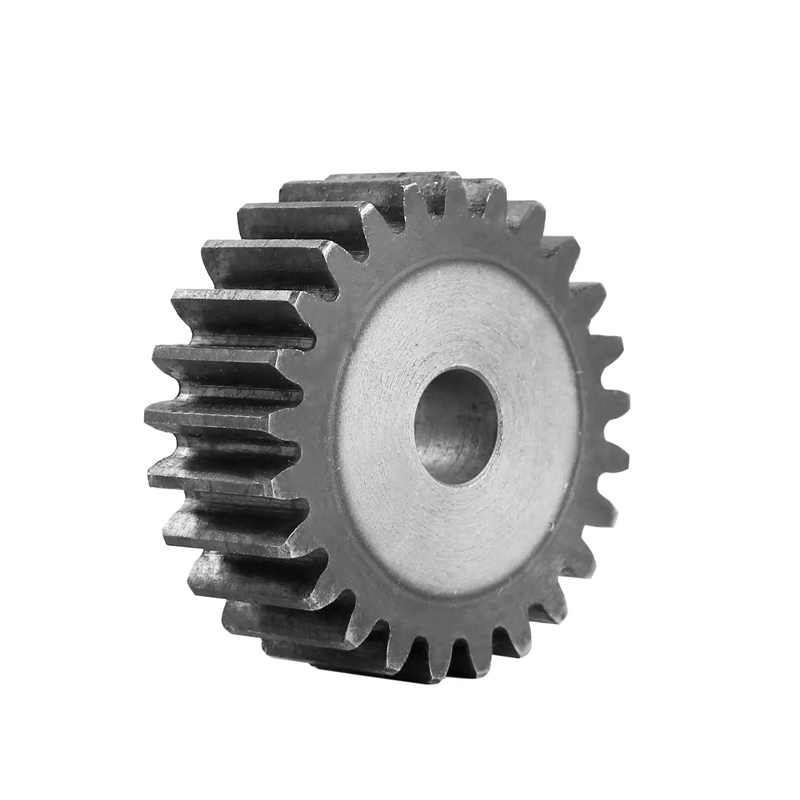
Surface heat treatment rack pinion gear is a mechanical transmission c...
See Details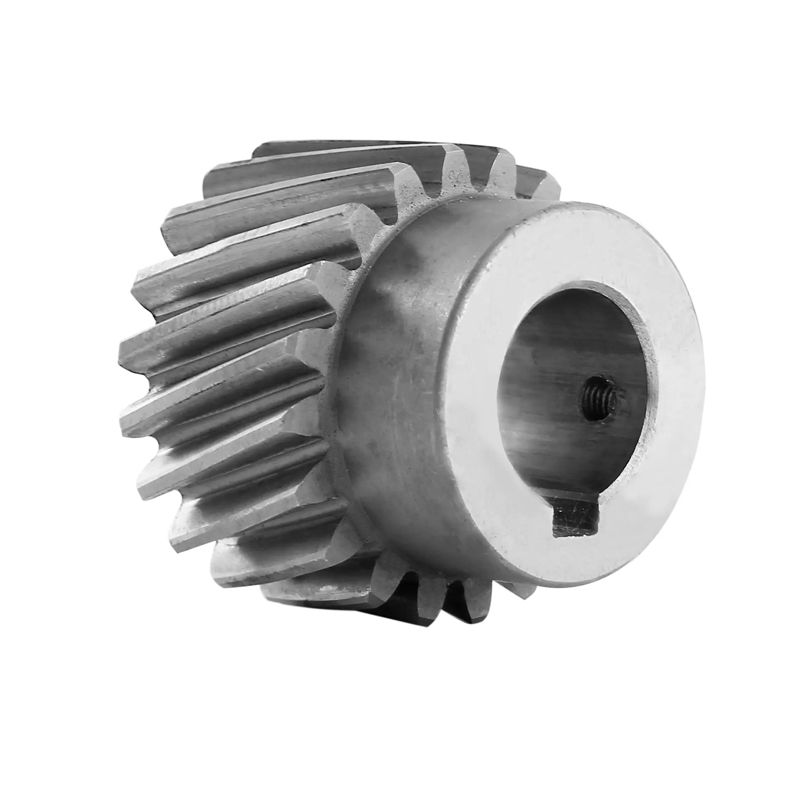
The multiple sizes high precision rack pinion gear system is an essent...
See Details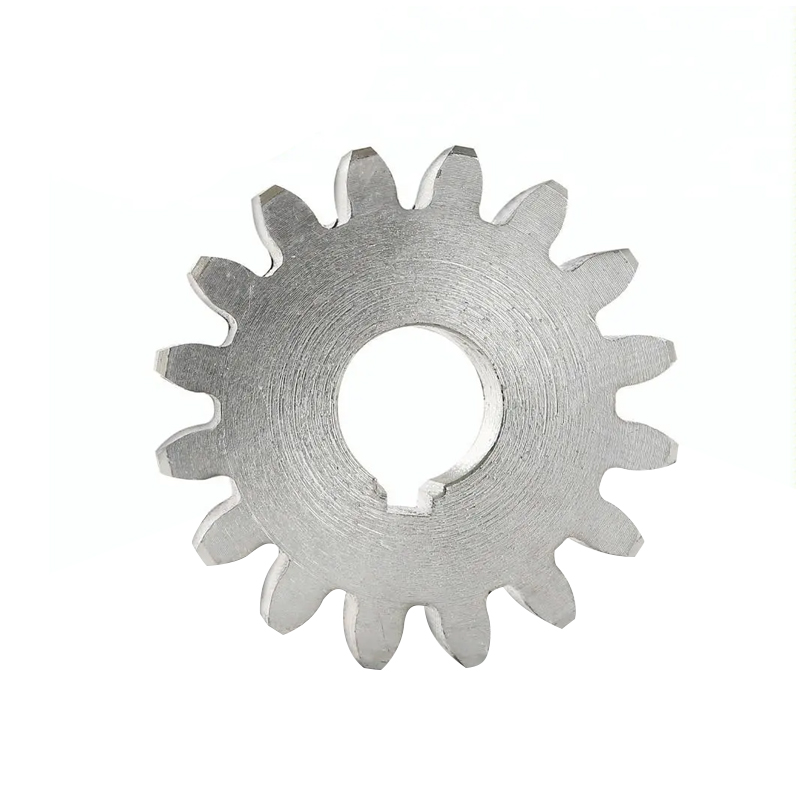
The Smooth Surface High Precision Rack Pinion Gear is a high-performan...
See Details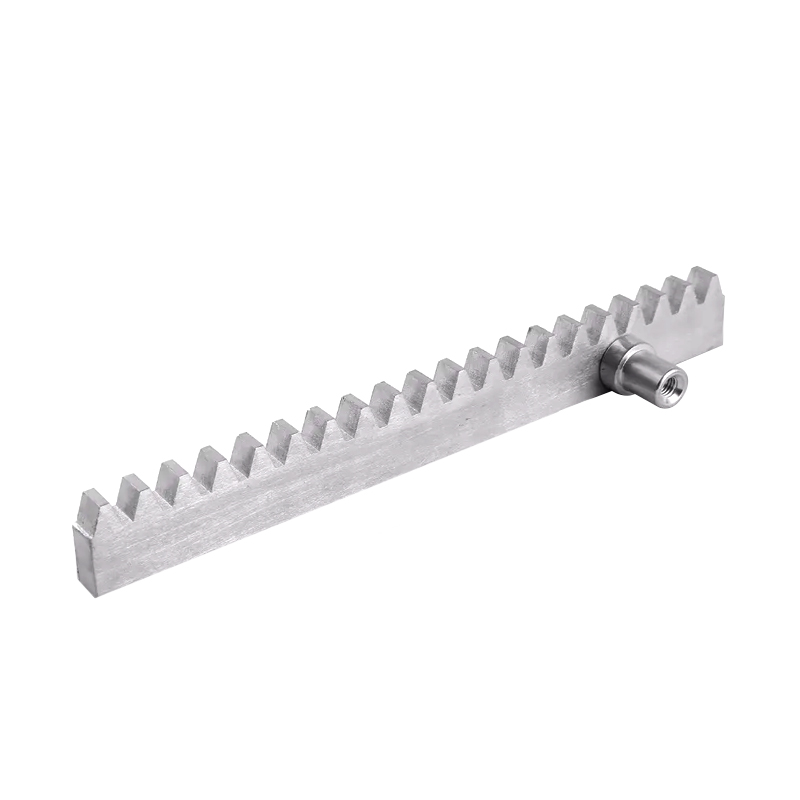
The Galvanized Sliding Door Steel Gear Rack is a robust and versatile ...
See Details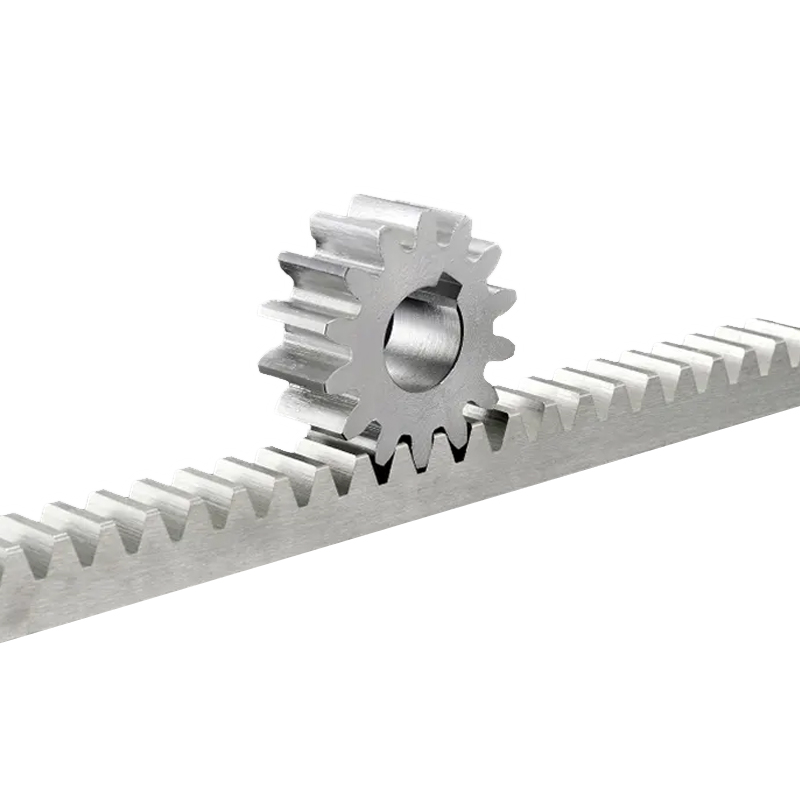
The stainless steel sliding door steel gear rack is an essential compo...
See Details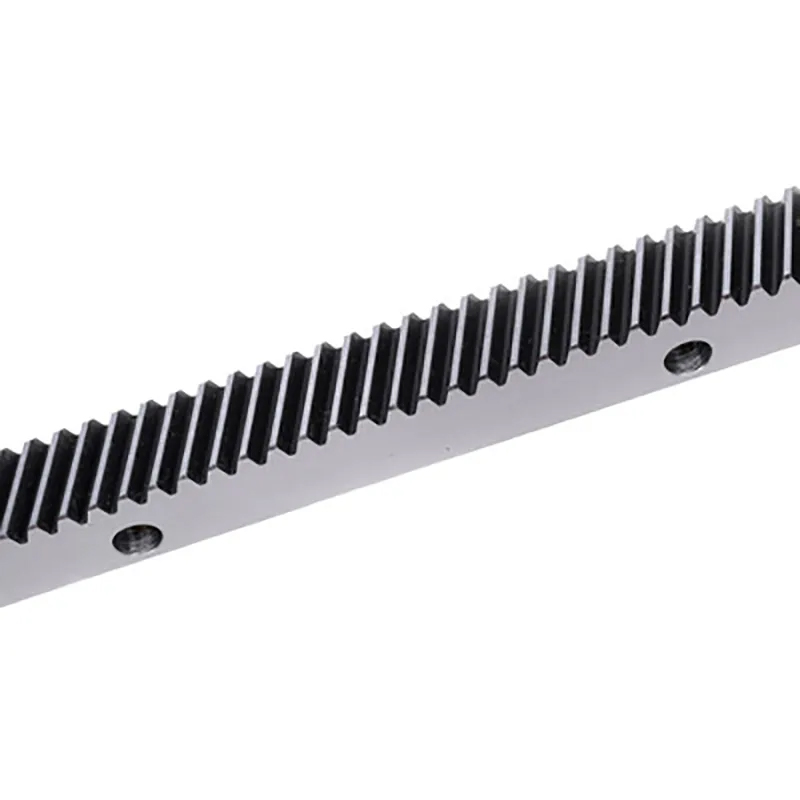
Precision and stainless steel gear racks convert rotational motion int...
See Details
The CNC machining helical gear rack is a critical component in various...
See Details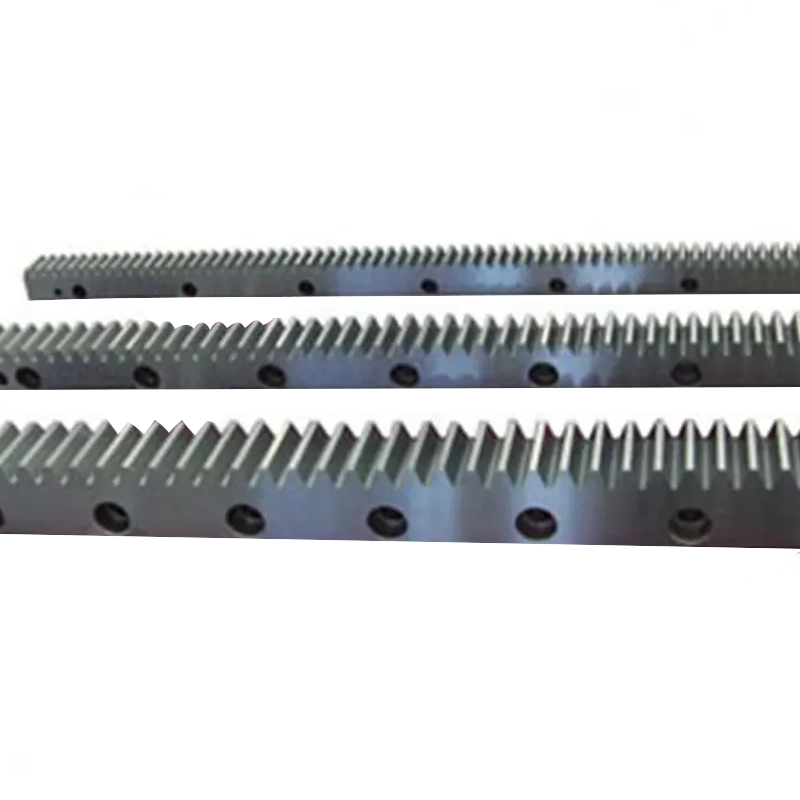
The Spiral Cone Various Specifications Helical Gear Rack is a type of ...
See Details
