
 English
 русский
 Español
No. 200 Gaoxin RD, Shanghua St, Lanxi, Zhejiang, P. R China
The multiple sizes high precision rack pinion gear system is an essent...
See DetailsInstallers and engineers specifying sliding gate drive systems often reach the same crossroads: the rack and pinion setup that worked well on a previous job feels over-engineered for a lighter application, but switching to a chain drive without a clear comparison of the trade-offs is a guess rather than a decision. A Nylon Rack for Sliding Gate use handles many residential and light commercial applications cleanly, a steel rack and pinion system suits heavy-duty industrial gates, and chain drive sits in a different part of the performance envelope entirely. Understanding where each system belongs — and where substitution actually makes sense — prevents both over-specification and underperformance in the field.
A rack and pinion system converts rotational motion from a motor into linear movement along the gate. The pinion — a circular gear attached to the drive motor — meshes with a rack mounted along the bottom or top edge of the gate. As the pinion rotates, it walks along the rack, moving the gate in the direction of travel. The teeth of the rack and pinion maintain continuous mechanical contact, which is what gives the system its positional accuracy and load capacity.
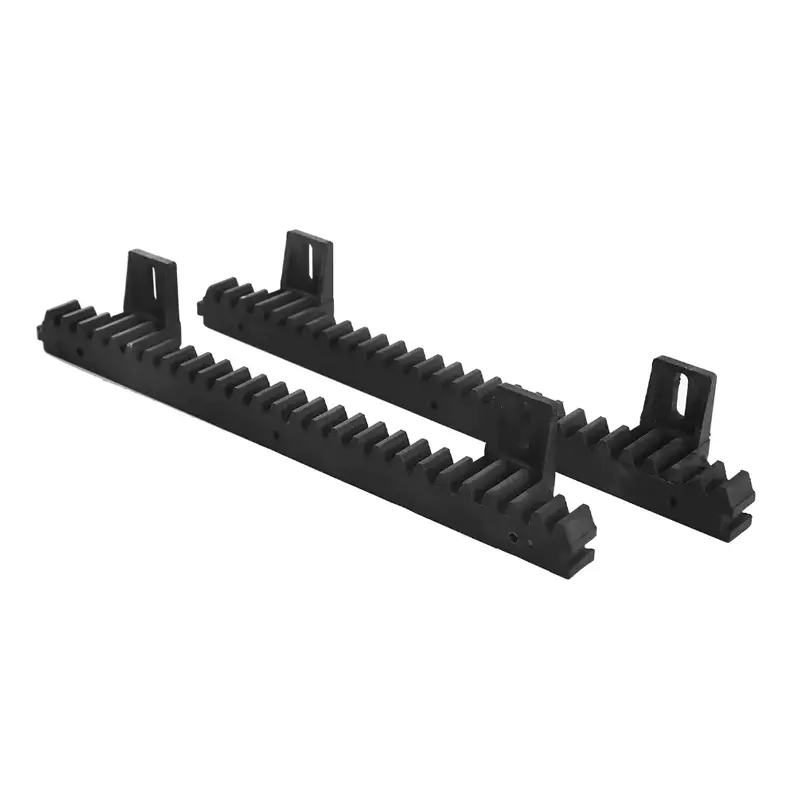
This direct mechanical engagement is the defining characteristic of rack and pinion drive. There is no slack, no stretch over time, and no intermediate element between the motor output and the gate movement. The gate position at any moment corresponds directly to the motor position, which makes the system straightforward to control and to integrate with automation electronics.
A Nylon Rack and Pinion gear system is the standard specification for residential sliding gates and lighter commercial installations. The nylon material offers several practical advantages over steel in these applications:
The sliding door gear rack in nylon is a practical default for gates up to a certain weight and cycle frequency. Beyond those thresholds, the material's lower mechanical strength compared to steel becomes the limiting factor.
For heavy industrial gates, high-cycle commercial applications, or environments with significant mechanical loading, a Stainless Steel Gear Rack or a conventional steel rack and pinion system provides the material strength that nylon cannot match. Steel racks carry higher loads, resist deformation under stress, and maintain their dimensional accuracy over longer service lives in demanding conditions.
A precision gear rack in steel is specified where positional accuracy is critical — automated gates with sensor-triggered stops, gates integrated into vehicle access control systems, or applications where the gate position needs to be known to within tight tolerances. The tooth geometry in a precision-grade rack is machined to tighter specifications than standard industrial rack, which reduces backlash and improves the consistency of movement.
A chain drive system moves a gate by connecting a motor sprocket to a driven sprocket through a roller chain. The motor rotates, the chain moves, and the gate is pulled or pushed along its track. Unlike a rack, the chain does not mesh with a fixed linear element — it transmits force through tension between two rotating points, with the gate attached to the chain at a fixed point.
This fundamental difference in operating principle creates a different performance profile. Chain drive systems are mechanically simpler in some respects — fewer components in direct contact with the gate structure, no precision-machined rack to install and align along the gate length — but they introduce characteristics that rack systems do not have.
Chain drive is not a compromise choice. In the right application, it is the better-specified system. The conditions where it performs well:
| Factor | Rack and Pinion | Chain Drive |
| Positional accuracy | High — direct mechanical engagement | Lower — chain stretch affects position |
| Load capacity | High — especially steel rack | Moderate — depends on chain rating |
| Installation complexity | Moderate — rack alignment required | Lower for long spans |
| Maintenance requirement | Periodic lubrication (steel) or low (nylon) | Chain tension adjustment, lubrication |
| Noise level | Low (nylon), moderate (steel) | Moderate — chain engagement noise |
| Component lifespan | Long with proper maintenance | Dependent on chain wear and tension |
| Cost at standard span | Moderate | Lower at longer spans |
| Precision application suitability | Strong | Limited |
The material choice in rack systems is not simply about cost. Nylon and steel racks occupy different application niches, and selecting the wrong material creates problems that are not solved by any amount of installation quality.
Beyond material, rack systems vary in tooth profile, module size, and mounting configuration. The module — the ratio of pitch diameter to tooth count — determines compatibility between the rack and the pinion. A rack and pinion system where the rack module does not match the pinion module will not function. This compatibility requirement is straightforward but is the source of specification errors when components are sourced from different suppliers.
Tooth profile options — straight cut and helical — affect how the engagement noise and load distribution behave in service. Helical profiles distribute load across more teeth simultaneously, which reduces noise and can extend tooth life under the same load. Straight-cut profiles are simpler and slightly less expensive, and they are the standard across gate rack applications generally.
The substitution question — chain drive instead of rack and pinion — resolves cleanly when the application requirements are laid out explicitly.
The residential sliding gate is the natural home for Nylon Rack and Pinion systems. The load is manageable within nylon's material capacity, the noise reduction benefit is genuinely valued by end users in residential settings, and the maintenance simplicity suits homeowners or property managers who are not equipped to manage complex mechanical systems.
Where a residential gate operator comes pre-specified with a nylon rack system, the chain drive alternative rarely offers a compelling advantage. The rack system in this context is already cost-appropriate, easy to install, and well-matched to the motor and gate combination.
Industrial applications shift the balance toward steel rack systems. A sliding door gear rack in steel handles the leaf weight, cycle frequency, and mechanical stress that industrial contexts generate. The precision positioning that some industrial access control systems require is achievable with a precision gear rack in ways that chain drive cannot match.
Chain drive in industrial contexts is not absent — there are applications where the gate geometry, span, or budget make it the practical choice — but the specification should be made with a clear understanding of where the system's limitations fall relative to the application's requirements.
A nylon gear rack factory that produces both rack components and complete gate drive system elements offers a different sourcing experience than a distributor assembling components from multiple sources. Factory-level production means material specifications are controlled, tooth geometry is held to consistent tolerances, and compatibility between rack and pinion components is verified rather than assumed.
For buyers sourcing at volume — gate system integrators, door manufacturers, or access control installers specifying across a portfolio of projects — working with a factory that can provide consistent specification documentation and supports OEM configuration reduces the risk of batch-to-batch variation that creates field problems.
Before committing to a rack or chain drive specification for a gate application, confirm:
Chain drive systems and gear rack systems address the same functional requirement — moving a sliding gate reliably — through different mechanical approaches with genuinely different performance profiles. The substitution of one for the other is not a universal upgrade or downgrade; it is a context-dependent decision that turns on load, precision requirements, span, cycle frequency, and cost structure. Nylon Rack and Pinion systems cover a wide range of residential and light commercial sliding gate applications efficiently. Steel and Stainless Steel Gear Racks extend that coverage into heavier and more demanding industrial contexts. Chain drive fills a specific niche where the rack system's precision and installation requirements exceed what the application needs, and a simpler, more flexible transmission makes practical sense. Working through these parameters against the specific gate application produces a drive system specification that performs as needed rather than one that was selected by default or habit.
If you are evaluating gate drive system options for a project or a product line and want to discuss rack specifications, material selection, or OEM sourcing, Zhejiang Luxin Door Operation Equipment Co., Ltd. works with gate system integrators and door manufacturers across nylon, steel, and stainless steel rack configurations with technical support for application-specific selection.
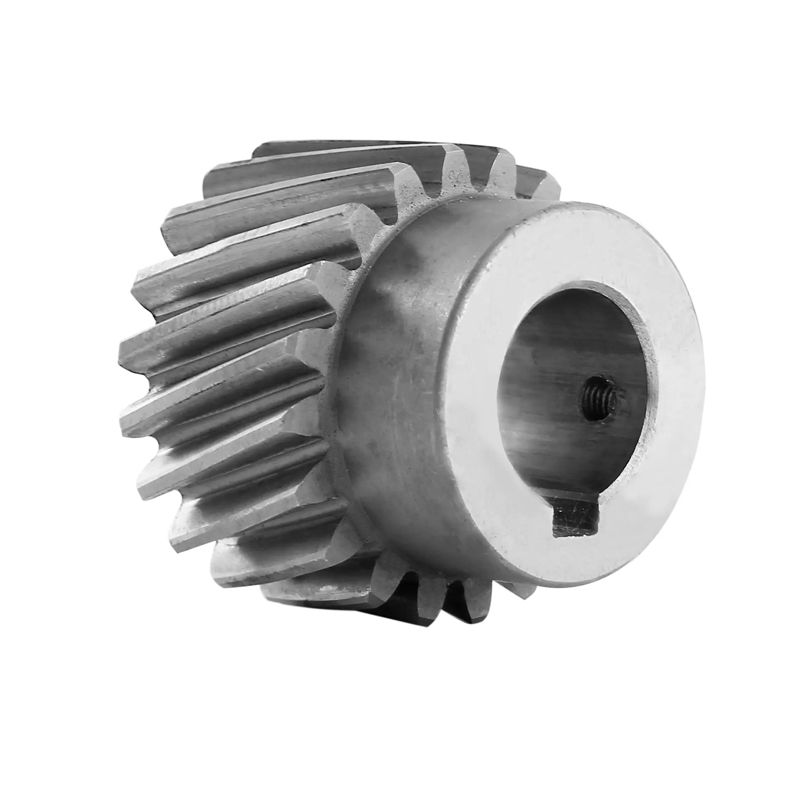
The multiple sizes high precision rack pinion gear system is an essent...
See Details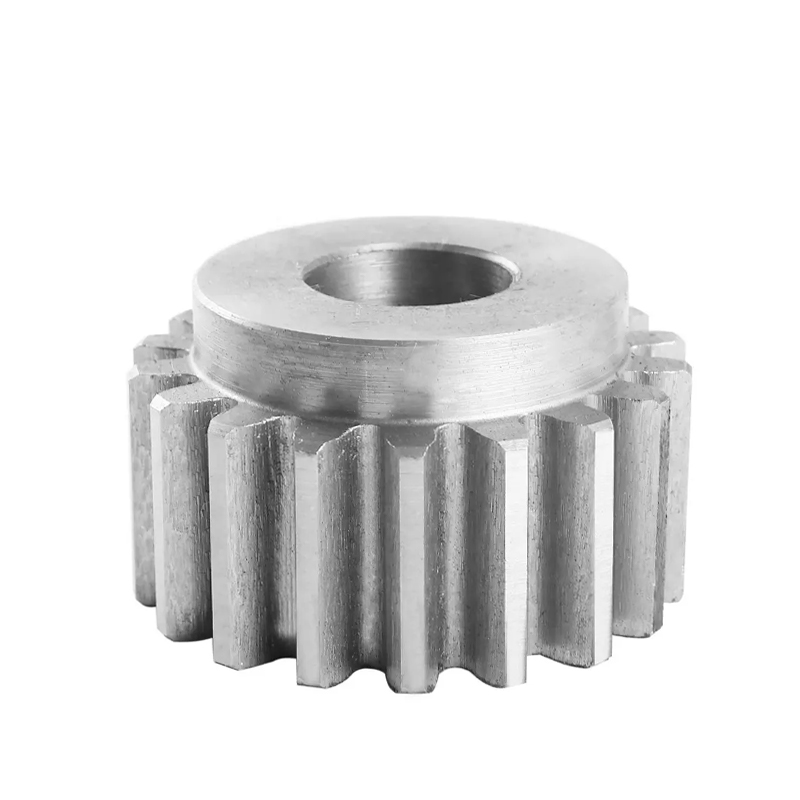
The High Precision Straight Teeth Rack Pinion Gear is a critical compo...
See Details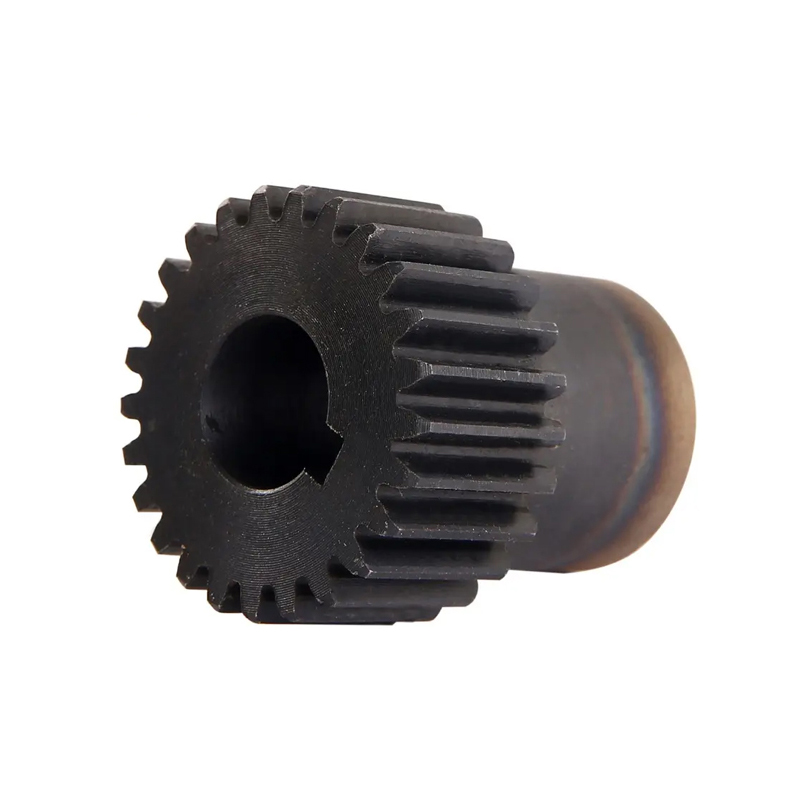
Product IntroductionThe Black Rust-Proof Straight Teeth Rack Pinion Ge...
See Details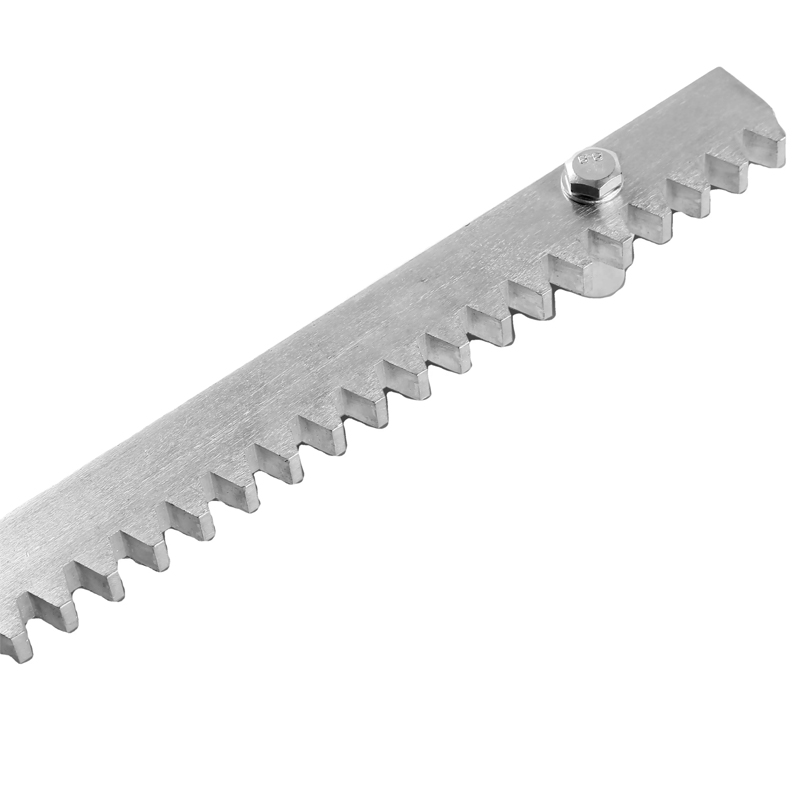
The Mounting Holes Sliding Door Steel Gear Rack is a critical componen...
See Details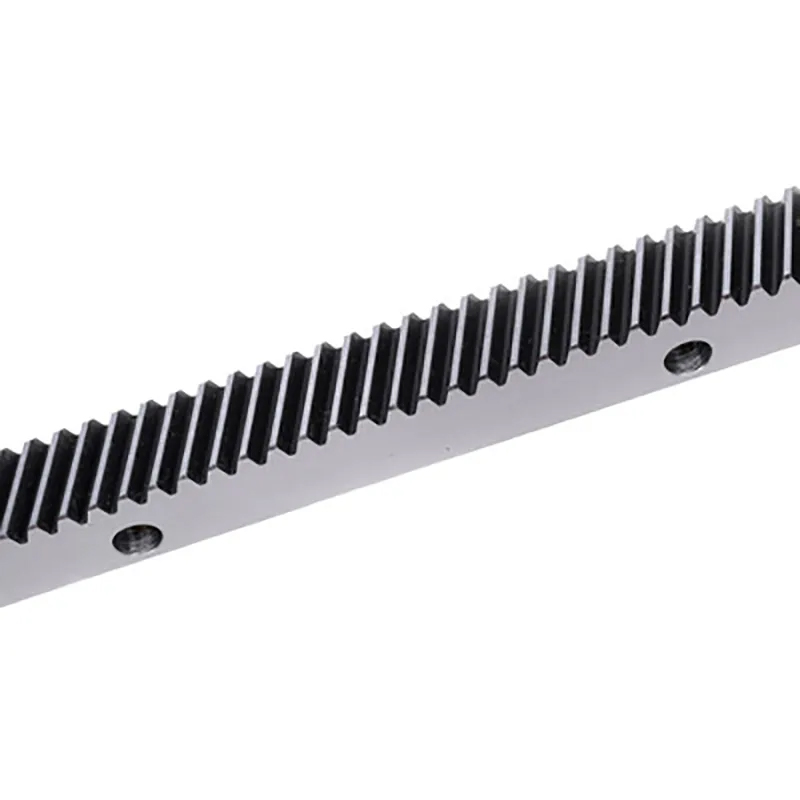
Precision and stainless steel gear racks convert rotational motion int...
See Details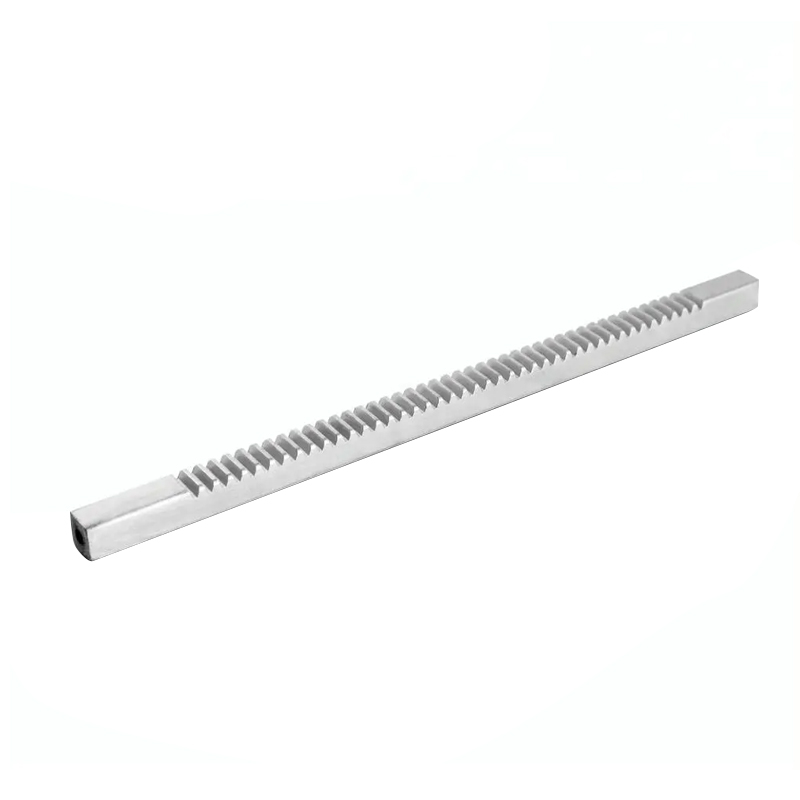
A sliding door gear rack and steel rack and pinion system plays an imp...
See Details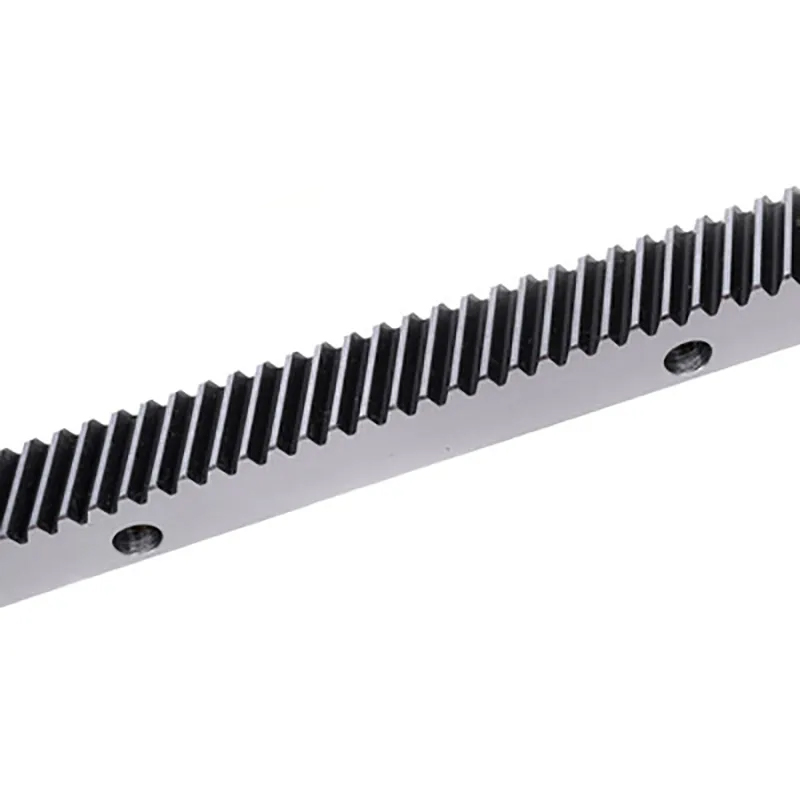
The CNC machining helical gear rack is a critical component in various...
See Details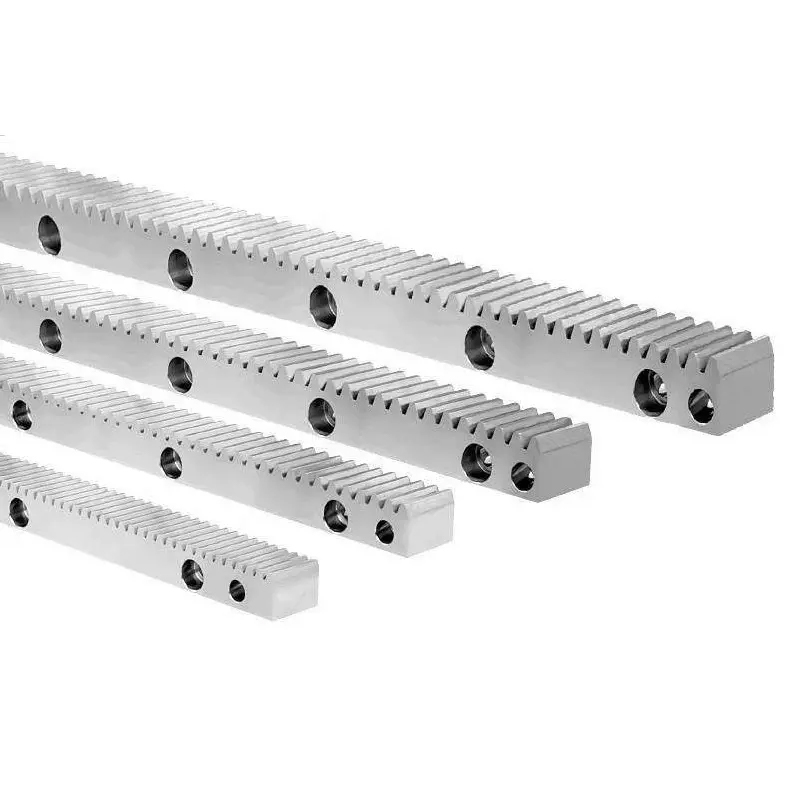
New Durable Custom Helical Gear Rack is a mechanical transmission ...
See Details
