What it actually is
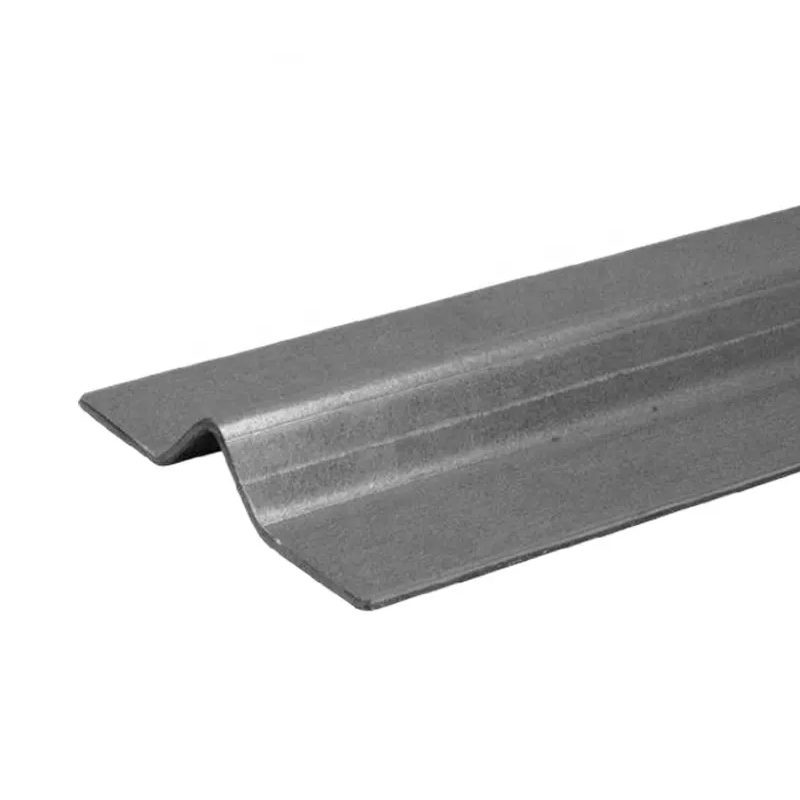
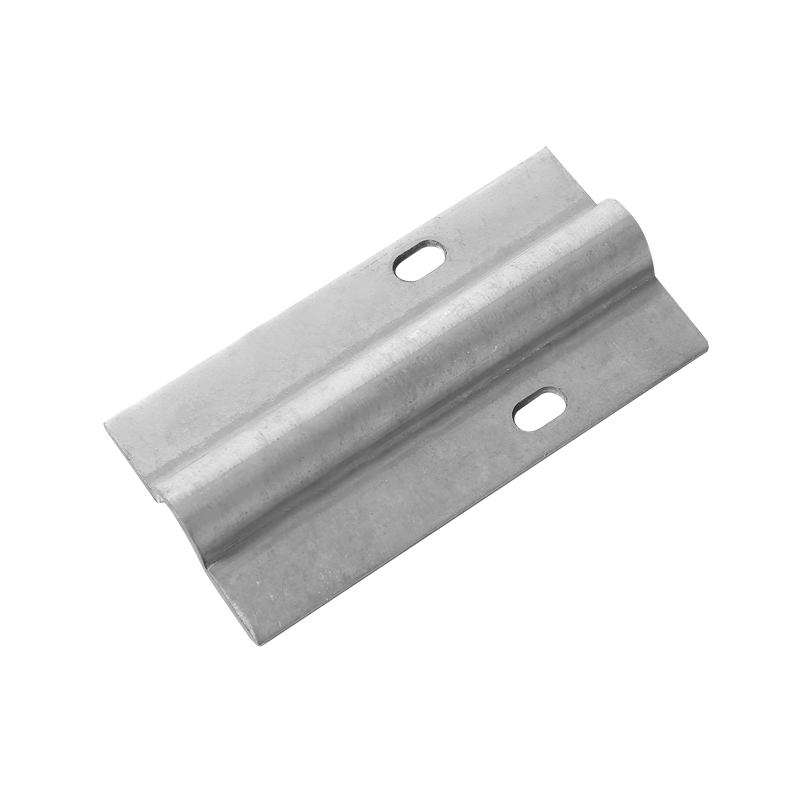
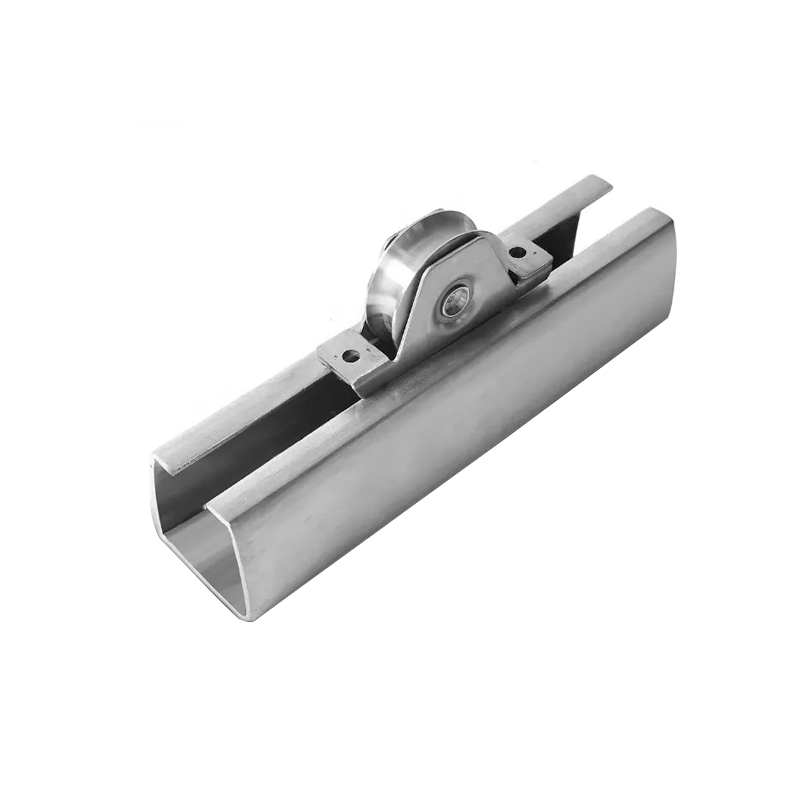
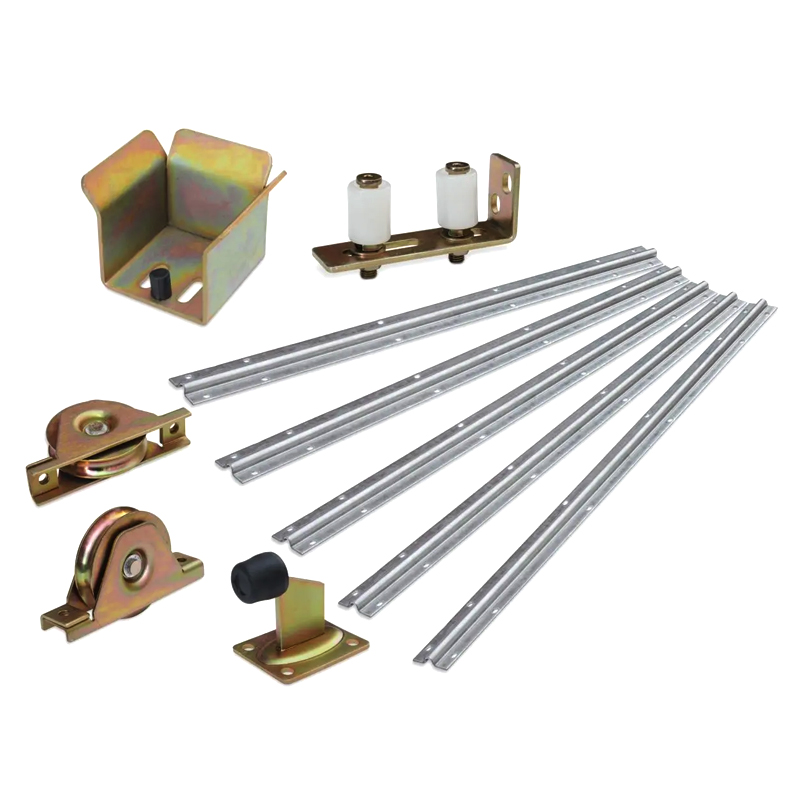
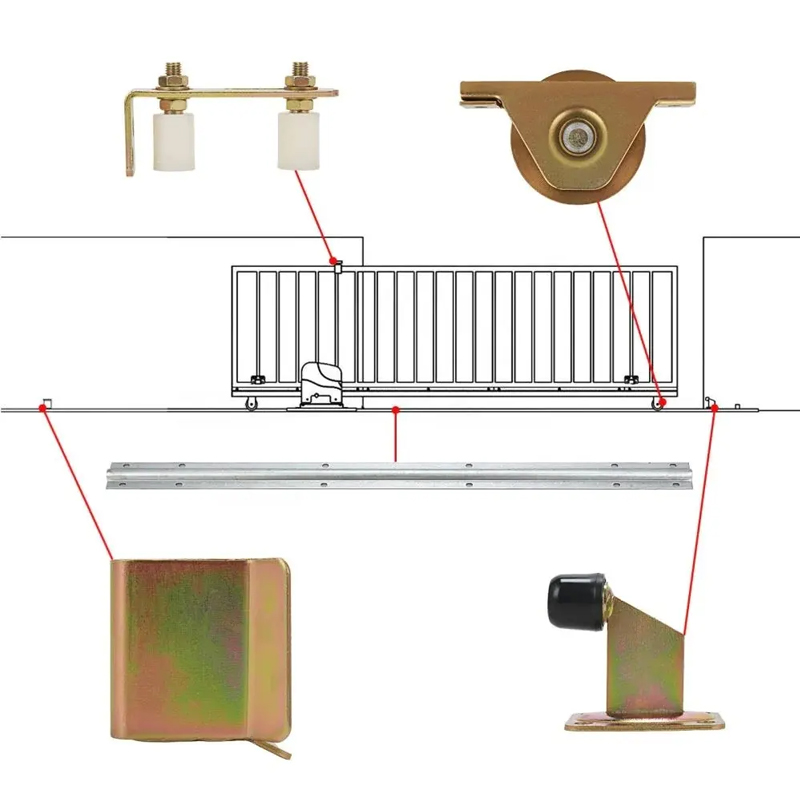
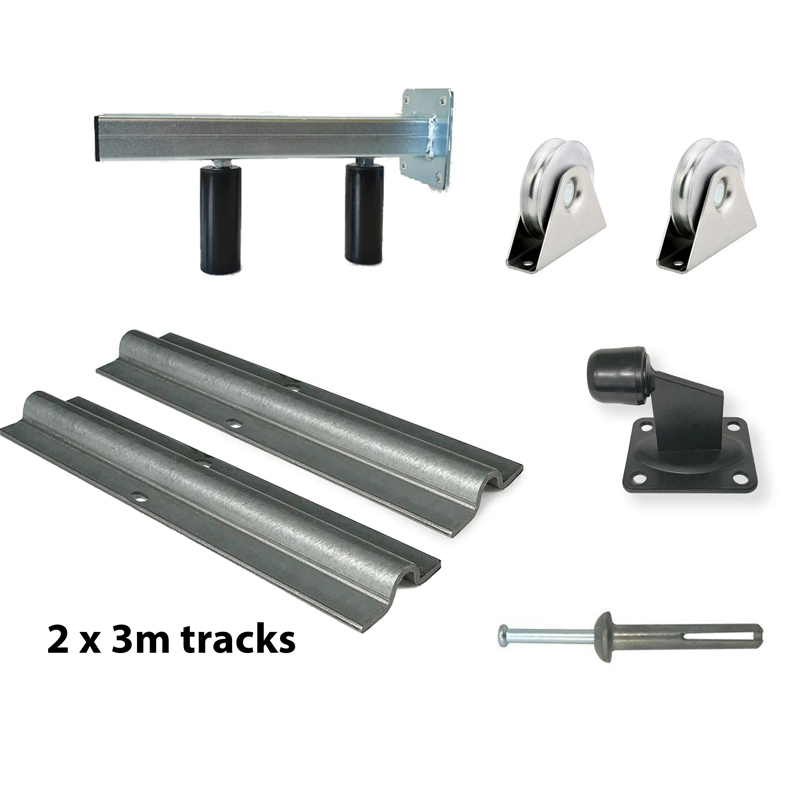
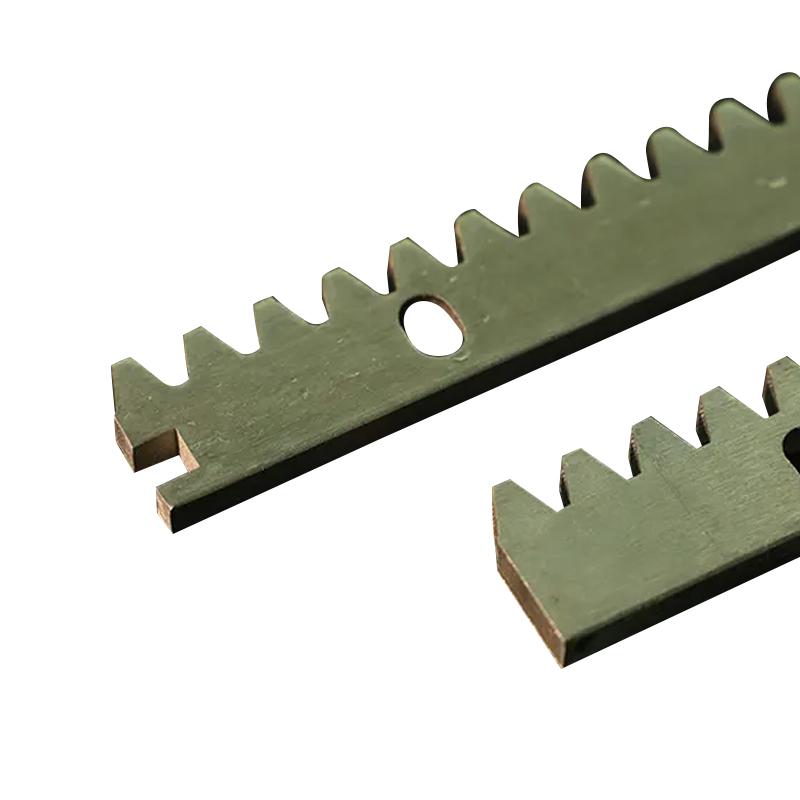
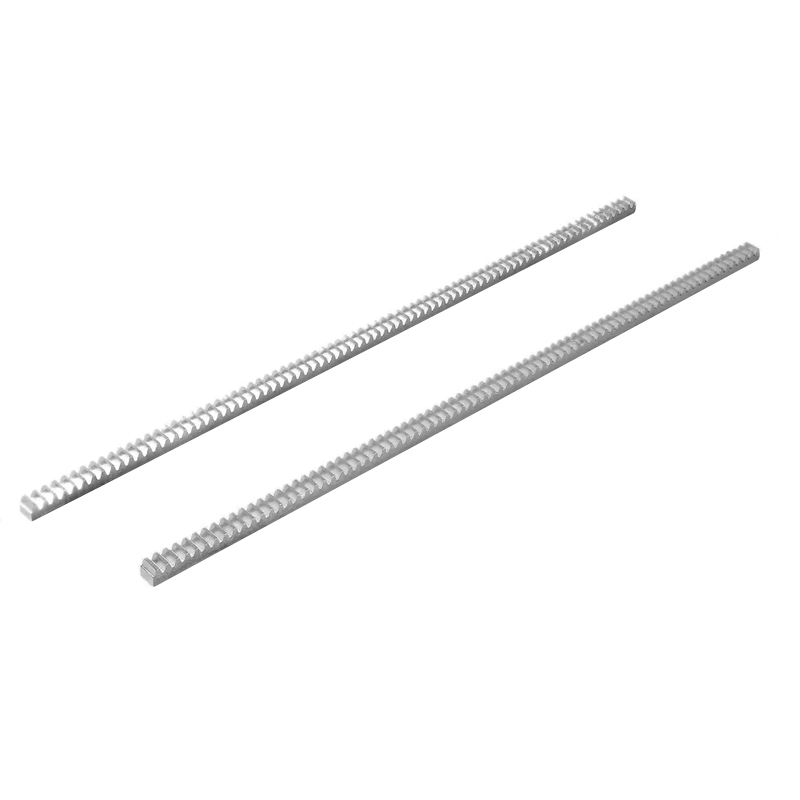
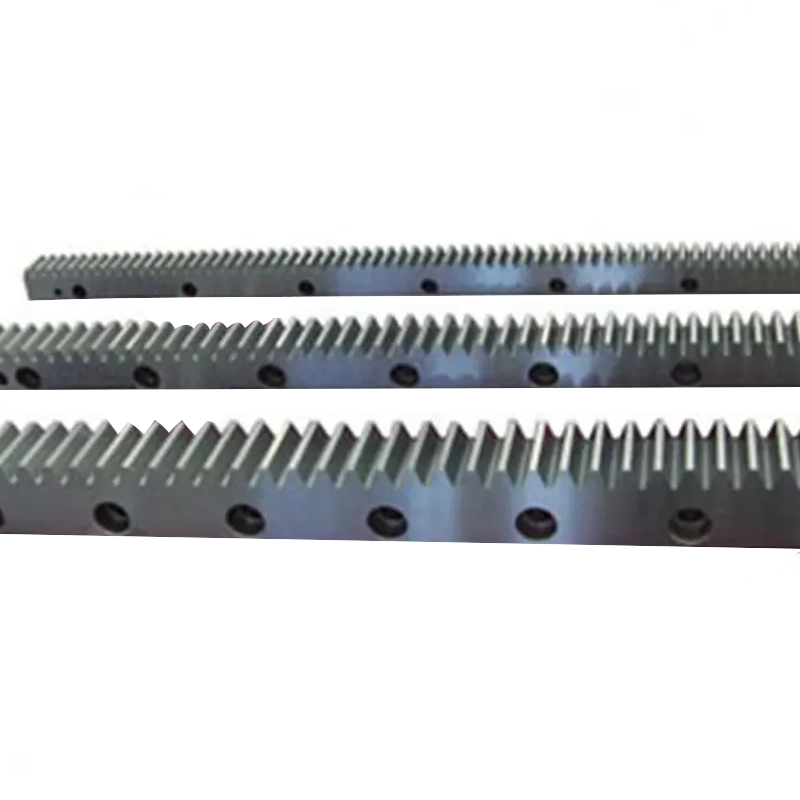
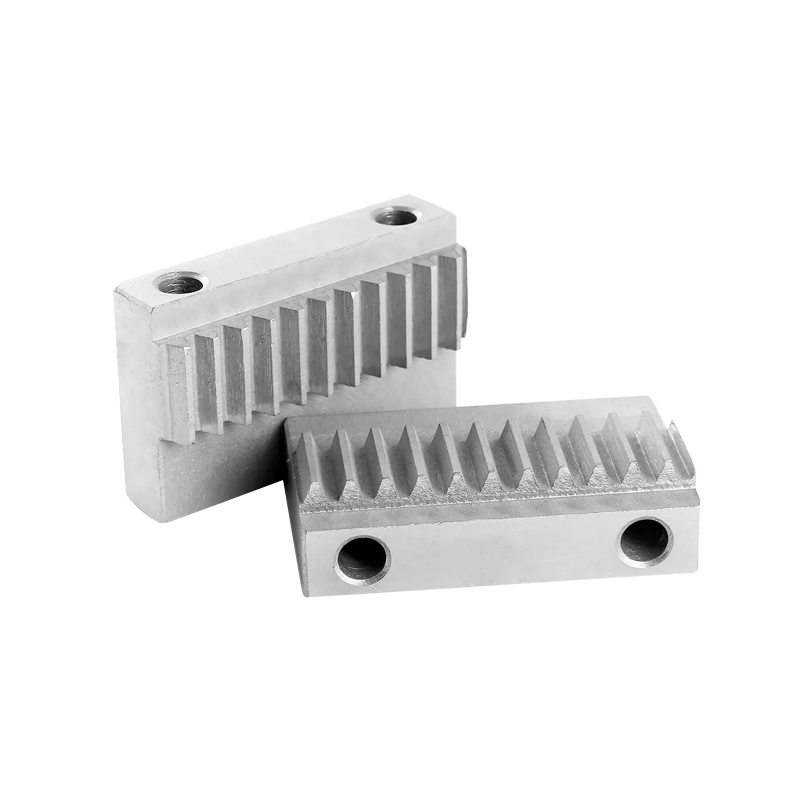
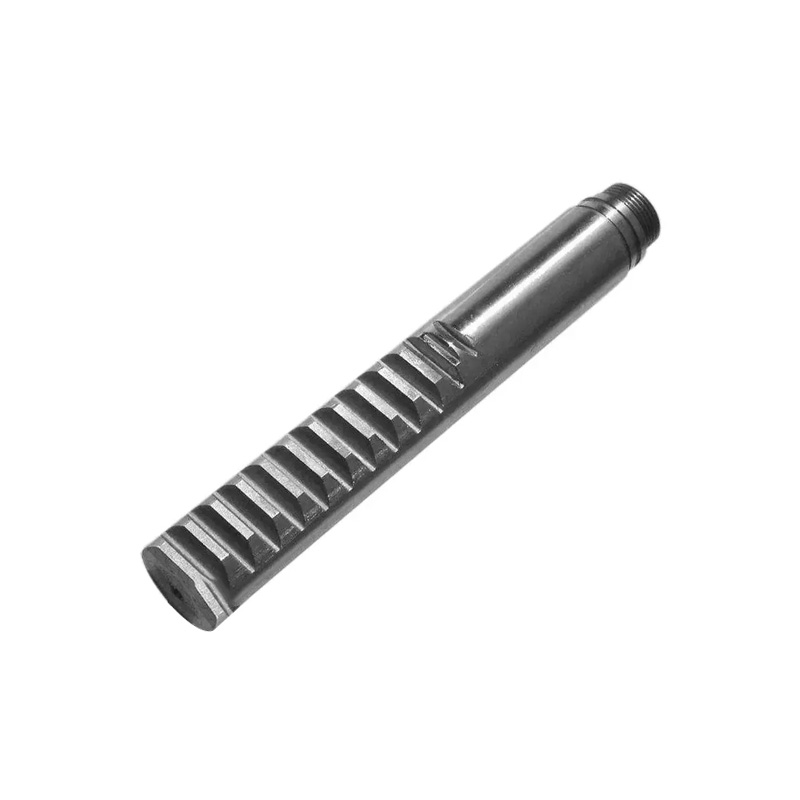
In simple terms, this system includes two main parts: a floor track and rollers.
The track is fixed on the ground. It gives the gate a clear path to follow. The rollers sit under the gate and do the actual moving. When everything is aligned properly, the gate slides with very little effort.
You'll often see this referred to as a Sliding Gate Floor Track system. In many cases, it also works together with Sliding Gate Runners, especially in setups where stability and smooth movement matter more than anything else.
This type of structure is quite common for heavy or wide gates, especially where overhead systems are not practical.
Materials used
Most of the time, the track and roller system is made from steel. Carbon steel and mild steel are the most common because they're strong enough and still cost-friendly for bulk orders.
For outdoor use, surface treatment becomes a big deal. Nobody wants a track that starts rusting after one rainy season. That's why you'll usually see:
- Galvanized steel
- Zinc-coated parts
- Powder-coated finishes
Rollers can vary depending on the application. Some use steel wheels for heavy-duty use, while others go for nylon or PU to reduce noise and improve smoothness. Bearings inside the rollers also matter a lot — that's basically what decides whether the gate feels “smooth” or “stiff” over time.
From a sourcing point of view, most buyers don't just look at material type. They also care about consistency. If one batch is fine but the next one bends or rusts too fast, that's a problem.
How it's made
The production process isn't complicated, but it does need to be controlled properly.
First, steel is cut and formed into track profiles. Depending on the design, it might be rolled, bent, or welded. Then rollers are made separately — usually machined or stamped, then fitted with bearings and small components.
After that, everything gets surface treatment. This is the stage where the product gets its anti-rust protection and final finish.
Before packing, there's usually a basic check: does the roller spin smoothly, is the track straight, do the dimensions match, and does everything fit together properly.
It sounds simple, but small issues here can turn into big installation problems later on site.
Where it's used
This kind of system shows up in a lot of places. Once you start looking, you'll see it everywhere.
Residential sliding gates are probably the most common. Think villas, private houses, community entrances — basically anywhere people want a simple sliding gate that works without fuss.
Then there are commercial and industrial sites: warehouses, factories, logistics yards, parking entrances. In these places, gates are heavier and used more often, so stronger Sliding Gate Floor Track systems are usually required.
Agricultural sites also use them a lot — farm entrances, storage sheds, equipment yards. These environments aren't always clean or flat, so a solid roller-track setup makes life easier.
And honestly, anywhere a gate needs to slide on the ground, this system can fit in.
What buyers usually care about
If you talk to importers or wholesalers, they rarely ask about just one thing. It's always a mix.
Price comes first, of course. But most experienced buyers won't chase the cheapest option blindly. They've seen enough cases where low price means early rusting, bending tracks, or noisy rollers after a few months.
Weather resistance is another big one. Outdoor hardware has to deal with rain, sun, dust, and sometimes all of it in one day. A decent coating makes a huge difference in lifespan.
Load capacity is also important. A light residential gate and a heavy industrial gate are not the same game. If the track is too weak, it won't last. If the rollers are undersized, they'll wear out fast.
Shipping and packaging is something people sometimes underestimate. Long tracks especially can get bent if packing isn't done properly. Once that happens, installation becomes a headache.
And then there's consistency. For wholesalers, it's not about one good batch — it's about getting the same quality every time. That's what keeps repeat orders coming.
Wholesale and customization
This is where things get more flexible.
Most suppliers in this category can offer OEM and ODM services. In practice, that just means the product can be adjusted depending on what the customer needs.
Common options include:
- Different track lengths
- Different load ratings
- Roller material options
- Custom hole spacing or mounting design
- Surface finish choices
- Logo engraving or stamping
- Private label packaging
- Custom cartons and barcode labels
Some buyers want a heavy-duty version for industrial projects. Others want a more cost-controlled version for residential markets. Both make sense, and a good supplier usually knows how to balance that.
Packaging can also be adjusted — from simple bulk packing to retail-ready boxes, depending on how the product will be sold locally.
Final thoughts
At the end of the day, a Sliding doors floor rollers sliding gate track system is not a complicated product. But it plays a very real role in how a gate performs every single day.
If the track is solid and the rollers are smooth, nobody thinks about it. The gate just works. That's usually the best sign.
For buyers in the Sliding Gate Floor Track and Sliding Gate Runners market, the key isn't chasing something fancy — it's about getting a product that's stable, durable, and consistent enough to work across different projects and environments.

 English
 русский
 Español