
 English
 русский
 Español
No. 200 Gaoxin RD, Shanghua St, Lanxi, Zhejiang, P. R China
CNC machine tools sliding doors rack pinion gear is a mechanical trans...
See DetailsProcurement decisions for sliding gate components are rarely straightforward. A nylon rack that looks adequate on a specification sheet can fail in the field because of a module mismatch, an incompatible motor pinion, or material that degrades faster than expected under outdoor UV exposure. For gate installation companies, equipment integrators, and wholesale buyers sourcing Nylon Rack for Sliding Gate systems in volume, these are not theoretical risks — they are documented patterns that show up in warranty claims, installation callbacks, and customer complaints after the system is commissioned. The evaluation process before purchase is what separates a procurement decision that holds up from one that generates problems six months later.
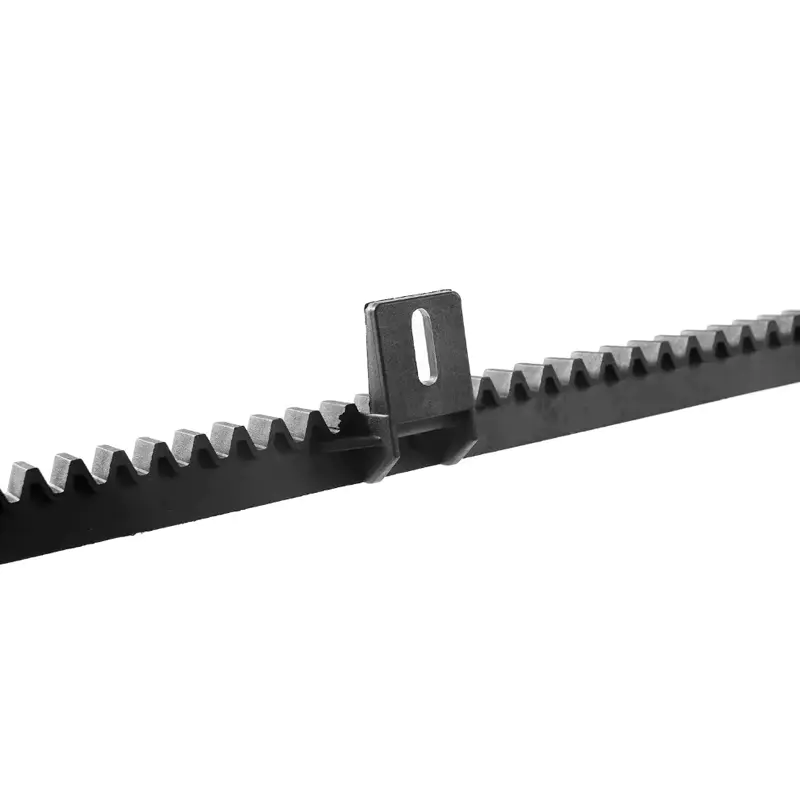
A sliding gate rack is a linear gear component fixed to the bottom or side of a gate structure. As the gate motor turns its pinion gear, the pinion engages the rack teeth and converts rotational force into linear movement — opening or closing the gate. The rack must therefore transmit mechanical force repeatedly across its entire length, every time the gate operates, for years of continuous use.
Nylon racks use an engineering polymer — typically glass-filled nylon or a reinforced polyamide compound — rather than metal for the rack body. The material choice affects noise level, weight, corrosion behavior, and how the component responds to temperature variation and UV exposure. Understanding what the material is designed to do, and where its limitations lie, is the foundation of a useful pre-purchase evaluation.
The Nylon Rack and Pinion system offers a distinct combination of properties that metal alternatives do not. It operates more quietly than steel-on-steel engagement. It does not corrode in outdoor environments where moisture and salt air are present. Its lower mass reduces the load on gate motor bearings over time. And for residential and light commercial applications where gate weight and cycle frequency are within nylon's load range, it provides a practical service life at a lower installed cost than stainless steel gear rack alternatives.
None of these advantages are relevant, however, if the specific nylon product selected does not meet the actual demands of the installation. That is the gap that pre-purchase evaluation is designed to close.
The word "nylon" covers a wide range of polymer formulations with substantially different performance characteristics. A Gate Rack Nylon component made from a basic unfilled polyamide behaves very differently from one produced using a glass-fiber reinforced compound with UV stabilizers. The surface appearance of the two products may be nearly identical. Their performance under sustained mechanical load, outdoor UV exposure, and temperature variation is not.
Buyers evaluating nylon rack products should ask specifically about the polymer compound used in manufacturing — not just the general material category. Relevant properties to confirm:
UV stabilization: outdoor gate installations expose the rack to direct sunlight for extended periods. Without UV stabilizers in the compound, the polymer surface degrades, becomes brittle, and begins to crack at the tooth roots under load.
Glass fiber reinforcement: fiber-reinforced compounds carry higher tensile strength and resist deformation under load. Unreinforced nylon softens at elevated temperatures and may deform at the contact points under a heavy or fast-moving gate.
Thermal stability range: gate racks in exposed outdoor locations experience significant temperature cycling between summer heat and winter cold. A compound that maintains its dimensional accuracy and strength across that range performs consistently; one that does not creates engagement variation as temperatures change.
These are material specification questions that a qualified supplier should be able to answer directly. Vague responses about "high quality nylon" without compound specifics warrant further investigation before placing an order.
Beyond the compound itself, the manufacturing process determines how accurately the rack teeth are formed and how consistent those dimensions are across a production batch. Injection-molded nylon racks require precise tooling, controlled processing temperatures, and consistent material flow to produce tooth geometry that matches the specified module accurately.
Visual inspection of rack samples can reveal certain quality indicators:
Buyers sourcing wholesale volumes should request dimensional inspection reports or process capability documentation from suppliers, not just samples. A single good sample does not confirm batch-to-batch consistency.
The module of a gear rack defines the relationship between the pitch circle diameter of the mating pinion and the number of teeth. In practical terms, it determines the physical spacing of the rack teeth. A rack with module 4 and a pinion designed for module 4 will mesh correctly. The same rack with a module 6 pinion will not — the teeth will either not engage at all, or will engage partially and wear rapidly at the contact points.
Module mismatch is a common cause of sliding gate system failure after installation. It often occurs because the rack and pinion are sourced separately — the gate motor from one supplier, the rack from another — without explicit confirmation that the module is matched. The system may appear to function initially, but the irregular tooth contact accelerates wear on both components and eventually produces noise, skipping, or complete disengagement.
Before purchase, confirm:
This information should be available from the motor manufacturer's documentation and from the rack supplier's product specification. If either party cannot provide it clearly, the compatibility question remains open.
Module matching addresses tooth geometry. Engagement depth addresses the physical relationship between the installed rack and the motor pinion in the actual gate installation. The pinion must contact the rack teeth at the correct depth — too shallow and the teeth skip under load; too deep and tooth contact becomes a binding force that strains the motor and wears both components prematurely.
The engagement depth is set by the installation geometry: the height of the rack on the gate, the position of the motor mounting plate, and the height of the motor's pinion centerline above the gate track surface. This is an installation variable, but the rack product dimensions must be consistent with the system's design geometry.
Buyers specifying rack for a defined gate system should confirm that the rack's height profile, tooth depth, and overall cross-section are compatible with the motor mounting geometry in the target installation.
A direct comparison between these two material categories helps clarify where nylon racks are a sound choice and where stainless steel gear rack products are the more appropriate specification.
| Evaluation Factor | Nylon Gate Rack | Stainless Steel Gear Rack |
|---|---|---|
| Noise level during operation | Low — polymer-on-metal engagement is quieter | Higher — metal-on-metal contact generates more noise |
| Corrosion resistance | Works well across many outdoor settings | Excellent — suited for coastal and harsh chemical environments |
| Load capacity | Adequate for residential and light commercial gates | Higher — suited for heavy industrial or high-cycle applications |
| Temperature sensitivity | Can soften in sustained high heat without reinforcement | Stable across wider temperature range |
| Weight | Light — reduces motor bearing load | Heavier — may affect motor sizing |
| Wear on motor pinion | Lower abrasion on metal pinion teeth | Higher mutual wear where both rack and pinion are metal |
| Replacement cost | Generally lower per unit | Higher — but may replace less frequently in demanding applications |
| UV resistance | Requires UV-stabilized compound outdoors | Not a concern |
The pattern that emerges is consistent with what experienced gate installers report: Nylon Rack and Pinion systems work well for standard residential and light commercial applications where noise, cost, and corrosion resistance are priorities. Stainless steel gear rack becomes the appropriate choice when cycle frequency is high, gate weight is substantial, or environmental conditions — coastal salt air, chemical exposure, sustained high temperatures — push beyond nylon's reliable operating range.
Sourcing the wrong material for the application category is a procurement decision with predictable downstream consequences. Matching the material to the actual load and environment profile removes that variable from the risk calculation.
Outdoor gate installations in sunny climates subject the rack to UV radiation for many daylight hours each day across years of service. For an unstabilized nylon compound, the accumulated effect is surface degradation, embrittlement, and eventual cracking at stress concentration points — specifically the tooth roots, which bear heavy loads during engagement.
A rack that operates without issue in its early service life but later begins to skip or fragment several years after installation is, in outdoor settings where the material lacks UV stabilization, almost certainly a case of UV degradation.
When evaluating rack products for outdoor installation:
In climates with significant seasonal temperature variation, nylon rack dimensions will change slightly between summer and winter conditions. A well-engineered compound maintains its tooth pitch and profile within acceptable tolerances across this range. A lower-grade compound may exhibit measurable dimensional change that affects engagement precision.
For installations in climate zones with significant temperature swings, testing rack dimensional stability across the expected temperature range — or requesting test data from the supplier — provides useful confirmation before committing to a large purchase volume.
The gap between what a supplier sends as a sample and what arrives in volume production is where many procurement decisions unravel. A supplier whose quality management process relies on final inspection of finished product, rather than process control during manufacturing, will produce variable results across batches. For sliding gate rack components, where tooth geometry must be consistent within tight tolerances, batch variation translates directly into field performance variation.
Indicators of manufacturing discipline worth investigating:
For buyers sourcing Gate Rack Nylon products in bulk — particularly for distribution to multiple installers — batch consistency is a commercial liability management issue as much as a quality one. A single inconsistent batch distributed across many installation sites creates a disproportionate problem.
Before placing a substantial order, a structured documentation request reveals more about a supplier's operational maturity than any sales conversation will.
Useful documents to request:
Suppliers who respond to these requests promptly and with substantive documentation demonstrate a level of process discipline that is meaningful. Those who respond with resistance, delay, or generic materials that do not address the specific product being evaluated are providing useful information of a different kind.
Gate rack replacement in an installed system requires opening the gate, accessing the rack fasteners, removing the worn rack, and installing and aligning the replacement. In commercial or industrial settings where the gate is part of an access control or logistics system, the downtime involved in a rack replacement has operational cost implications that the component's purchase price does not reflect.
A rack that costs somewhat more but lasts significantly longer, without requiring interim maintenance or early replacement, delivers a lower total cost of ownership than a cheaper product with a shorter service life. Buyers making procurement decisions on per-unit price alone, without estimating replacement frequency and associated labor and downtime costs, are working from an incomplete cost model.
Questions worth building into a supplier evaluation:
These questions shift the conversation from product price to product value — a frame that serves bulk buyers and installation companies better than a price-comparison alone.
Bringing the evaluation criteria together into a structured checklist helps procurement teams move through supplier and product assessment systematically rather than reactively.
Material and manufacturing:
Technical compatibility:
Environmental suitability:
Supplier reliability:
Long-term cost:
Working through this list before committing to a supplier and volume order identifies gaps that are easier to address before purchase than after installation.
Buying a sliding gate rack is not a technically complex procurement decision — but it is one where the consequences of a poor decision are delayed, which makes them easy to underestimate at the point of purchase. A Nylon Rack and Pinion system that is correctly specified, matched to a compatible motor pinion, manufactured with a UV-stabilized reinforced compound, and sourced from a supplier with documented batch consistency will function without significant maintenance across a long service life. The same application using a rack with the wrong module, an unstabilized compound, or inconsistent tooth geometry will begin producing problems within months — problems that are far more expensive to address in the field than they would have been to prevent through careful pre-purchase evaluation. For installation companies, equipment distributors, and procurement teams managing gate component supply at scale, the evaluation framework above reflects what experienced buyers have learned through real-world procurement experience. Zhejiang Luxin Door Operation Equipment Co., Ltd. manufactures Nylon Rack for Sliding Gate systems with documented material specifications, dimensional consistency controls, and product configurations designed for outdoor and commercial gate applications — and their team can support buyer evaluation processes with technical documentation, sample requests, and specification consultation for project-specific requirements.
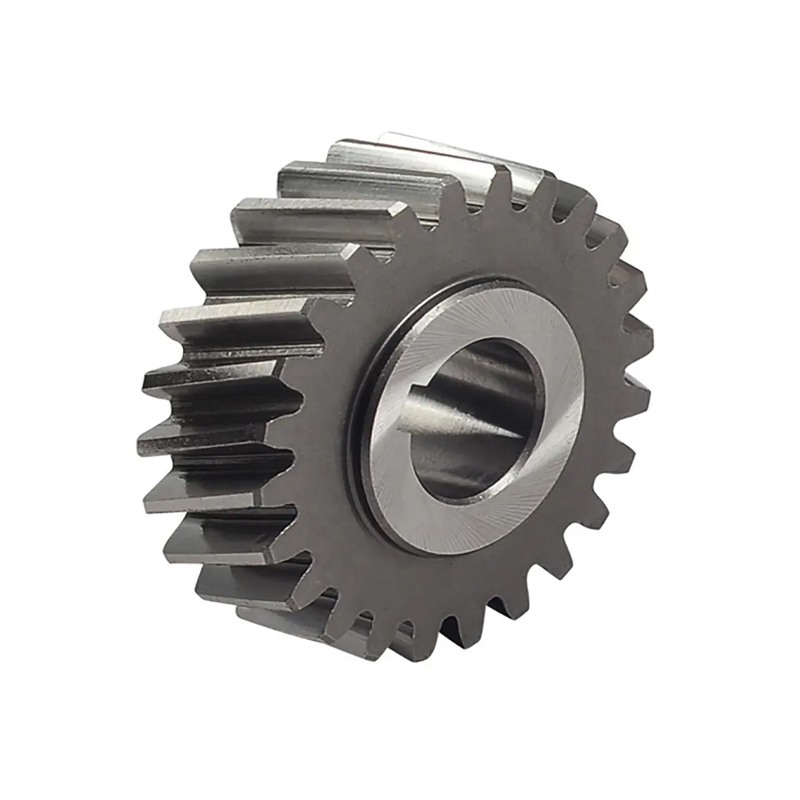
CNC machine tools sliding doors rack pinion gear is a mechanical trans...
See Details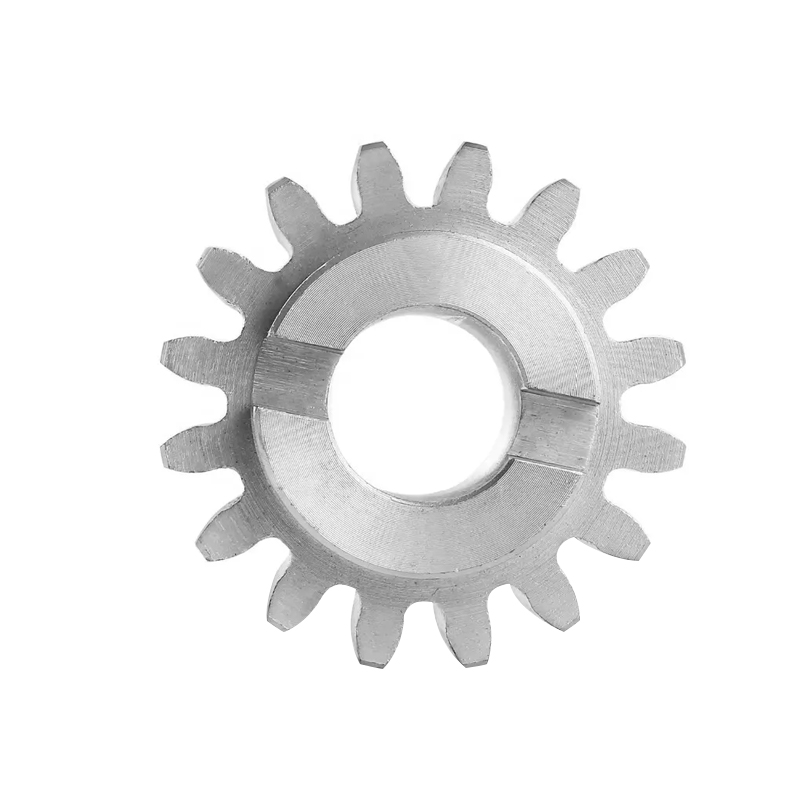
The Sliding Doors Steel Rack Pinion Gear is a critical component in va...
See Details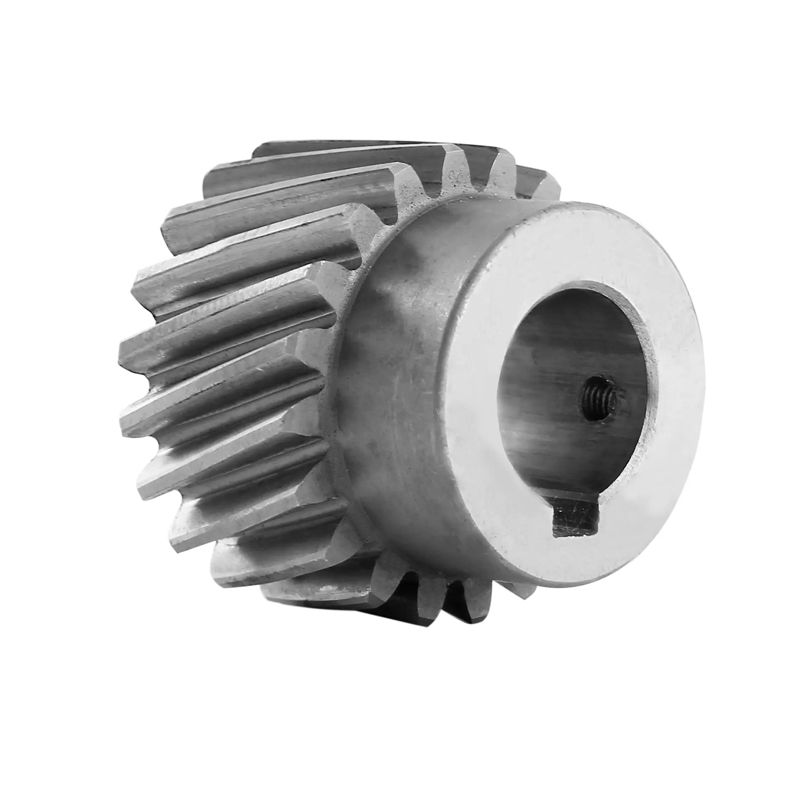
The multiple sizes high precision rack pinion gear system is an essent...
See Details
The Stainless Steel Stepped Rack Pinion Gear is a highly versatile and...
See Details
The Rack Pinion Gear for automatic door openers is a crucial component...
See Details
The Gearbox Steering Rack Pinion Gear is a fundamental component in mo...
See Details
The Double Pitch Sprocket Rack Pinion Gear is a specialized mechanical...
See Details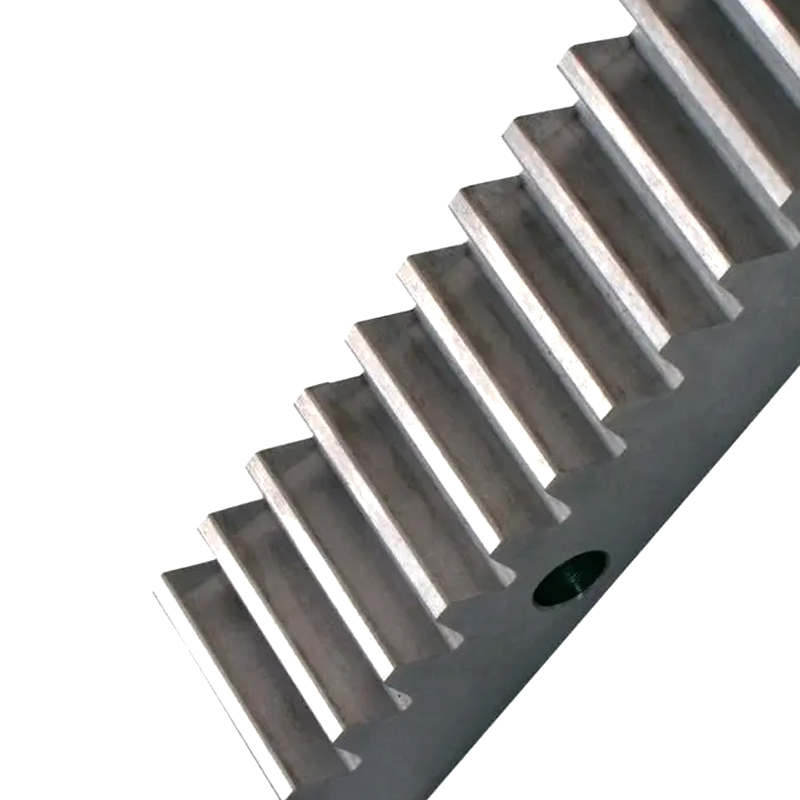
Lifts transmission systems helical gear rack is a key compo...
See Details
